Wondering why two homes with similar square footage can feel completely different in Manhattan Beach? A big part of the answer is architecture. In a market shaped by beach history, tight coastal lots, and design rules that influence what gets built, style affects how a home looks, lives, and even how buyers perceive its value. If you are buying, selling, or simply trying to understand the local market better, knowing the key architectural styles can help you read Manhattan Beach homes with a more confident eye. Let’s dive in.
Why architecture matters in Manhattan Beach
Manhattan Beach was founded as a planned resort town in the early 1900s and incorporated in 1912. That early identity still shows up in the homes you see today, especially in areas where original beach-town patterns remain easy to spot.
The city is also not one-size-fits-all. Its planning framework breaks Manhattan Beach into five areas: the Beach Area, Hill Section, East-Side/Manhattan Village, Tree Section, and El Porto. Each area has a different built form, which helps explain why one part of town may lean more compact and vertical while another feels broader and more traditionally residential.
In the Beach Area, very small lots and limited parking have shaped how homes are designed. Walkstreets and the Strand also play a major role, since these features influence access, outdoor space, and how homes relate to views, privacy, and the public realm.
Beach cottages: the original local look
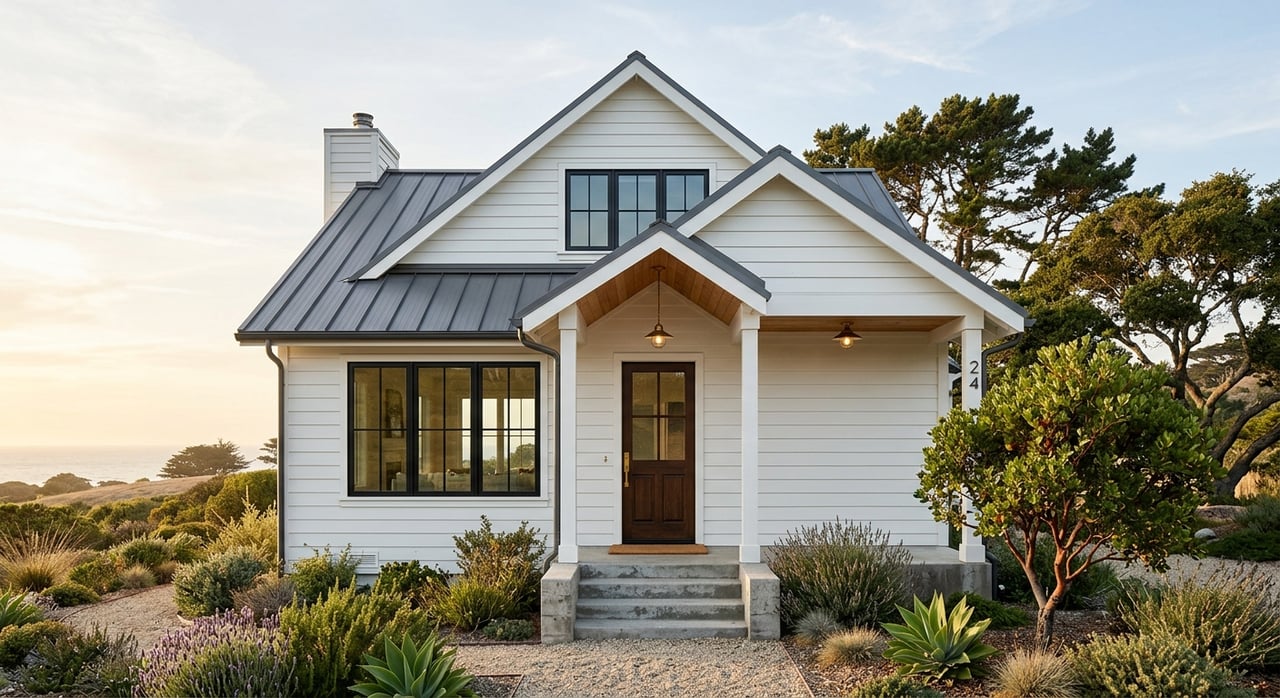
If you want to understand Manhattan Beach architecture at its roots, start with the beach cottage. Early housing in the city was dominated by beach cottages, and that simple, practical style became part of the city’s visual identity.
The local historical society notes that the original 1905 beach cottage used board-and-batten siding and a roof slope designed to shed sand in high winds. That detail says a lot. These homes were not trying to imitate another place. They were built as a direct response to the local coastal environment.
Today, beach cottages still matter because they represent the city’s earliest residential character. Even when a cottage has been remodeled, buyers often respond to the scale, charm, and sense of place that come with this style.
What to look for in a beach cottage
- Smaller scale and simple forms
- Practical layouts tied to coastal living
- Historic cottage character rather than grand detailing
- Features that feel rooted in the city’s early beach-town era
If you are a buyer, this style can appeal to you if you value authenticity and original character. If you are a seller, it helps to describe whether your home retains cottage elements or has been substantially updated.
Spanish Colonial Revival: a classic Southern California fit
Spanish Colonial Revival is one of the clearest historic style references in Manhattan Beach. The city’s first local historic landmark, a 1932 duplex at 2820 Highland Avenue, was built in this style.
In Southern California, Spanish-influenced revival architecture is commonly associated with stucco walls, clay-tile roofs, arched openings, and a strong indoor-outdoor feel. In Manhattan Beach, that makes this style both historically relevant and naturally suited to the climate.
This style often stands out because it feels warm, textured, and tied to the region’s broader architectural history. In a market with many newer builds, a well-kept Spanish Revival home can offer a distinct alternative to sharper modern lines.
Why buyers notice Spanish Revival homes
- Stucco and tile create a recognizable Southern California look
- Arched details soften the home’s exterior
- Indoor-outdoor flow fits coastal living
- Historic character can make a property feel more memorable
For sellers, this is a style where architectural coherence matters. Original details, proportional updates, and a thoughtful exterior presentation can make a stronger impression than piecemeal changes.
Mid-century modern and International style
Modernist architecture also has a place in Manhattan Beach. The city’s cultural resources report identifies Scott House on The Strand as a 1960 International style duplex, showing that clean-lined modern design is part of the local story, not just a recent trend.
Mid-century modern and International style homes typically emphasize simplicity, proportion, light, and a stronger connection between indoor and outdoor spaces. In Manhattan Beach, those ideas make sense because the setting rewards openness, breezes, and view-conscious design.
You will also see newer homes that reinterpret these modernist ideas. Rather than copying the past exactly, they borrow the same design logic through transparency, balanced massing, and open circulation.
Common traits of modernist homes
- Clean, restrained exterior lines
- Large windows or glass-heavy design
- Strong relationship between inside and outside
- A focus on proportion over ornament
If you are searching listings, terms like mid-century modern or International style can help you find homes with this cleaner architectural language.
A-frame homes: rare and recognizable
A-frames are not the dominant look in Manhattan Beach, but they are part of the city’s architectural record. The city designated 1505 Crest Drive as its second local historic landmark after determining it was the last, best remaining example of the A-frame style in Manhattan Beach.
That alone tells you something important. When a style becomes rare, it often becomes more visually memorable.
A-frames tend to stand out because of their dramatic roof form and unmistakable silhouette. In a market filled with coastal contemporary homes and remodeled residences, a true A-frame can feel especially distinctive.
Coastal contemporary and custom modern homes
For many buyers today, this is the style category they notice first. Newer Manhattan Beach homes are often described as coastal contemporary, contemporary beach style, or custom modern.
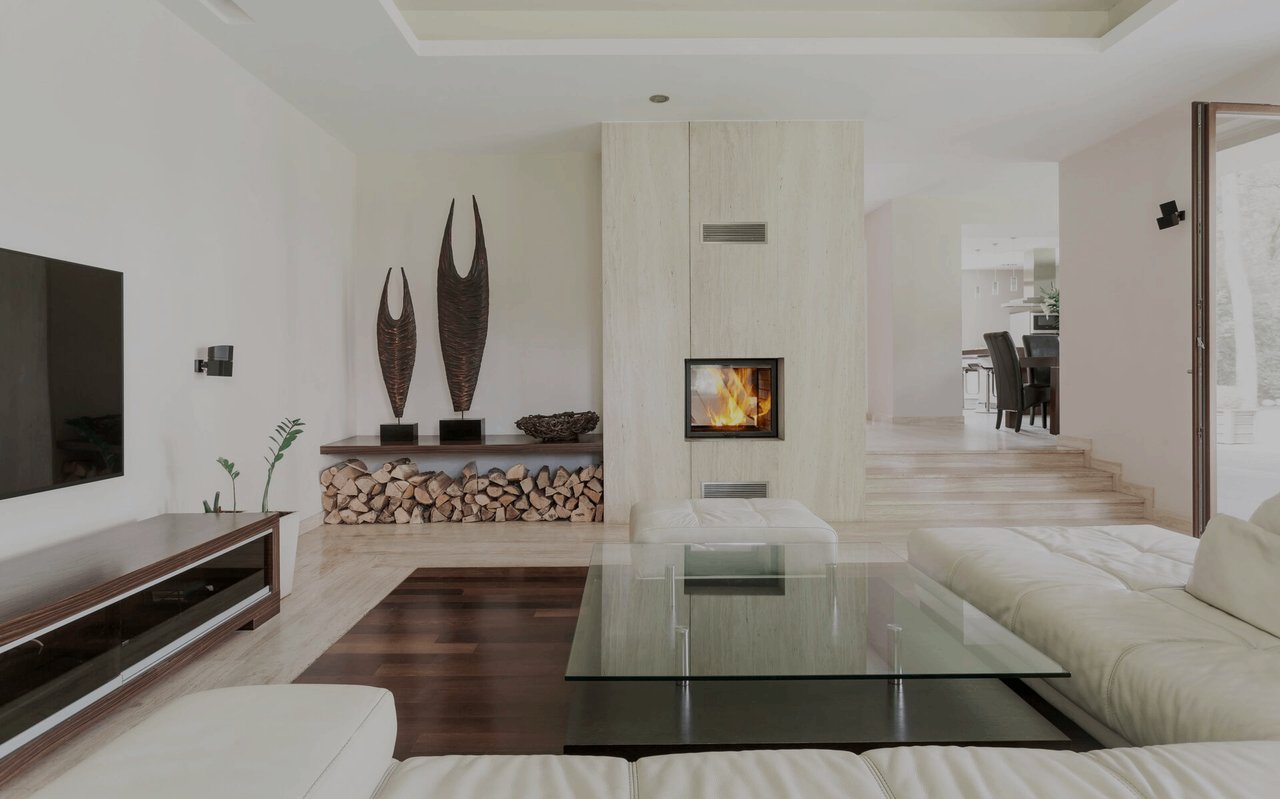
These homes often use glass, metal, concrete masonry, smooth finishes, and open layouts to create a light-filled, airy feel. On narrow sites, this style can be especially effective because it uses vertical space, view orientation, and outdoor living areas in a very intentional way.
A recent Manhattan Beach project highlighted in Architectural Record used glass, black-painted metal, and concrete masonry while still complementing nearby stucco, wood-framed, and mid-century homes. That balance matters in Manhattan Beach, where new construction is expected to work with surrounding neighborhood character rather than overpower it.
Why this style is so popular
- It feels open, bright, and current
- Large windows help maximize light and views
- Indoor-outdoor circulation supports coastal living
- Custom design can make challenging lots feel highly functional
When buyers say a home feels architecturally upgraded, open, or view-driven, this is often the design language they are reacting to.
How neighborhood shapes architectural style
One of the smartest ways to understand Manhattan Beach homes is to connect architecture with location. Style is not just about taste. It is also about lot size, street pattern, and neighborhood form.
The Beach Area tends to produce narrower, more vertical homes because lots are compact and parking is constrained. Walkstreet and Strand-adjacent properties are also shaped by pedestrian access, outdoor space, and view considerations.
The Tree Section, by contrast, is almost entirely single-family and known for mature trees and a more rural character. Larger single-family sections can often support broader home forms and a different sense of scale than beach-adjacent blocks.
El Porto has the highest residential intensity and includes a mix of residential and commercial uses, which gives it a different architectural rhythm. The Hill Section is primarily single-family residential, while East-Side and Manhattan Village add their own variation to the city’s overall housing mix.
A practical way to read the city
- Beach Area: compact lots, vertical living, strong beach-context design
- Tree Section: mostly single-family homes, broader forms, mature landscape setting
- Hill Section: primarily single-family homes with varied custom styles
- El Porto: higher residential intensity and mixed-use context
- East-Side/Manhattan Village: a distinct housing mix compared with beach-adjacent areas
Why style affects buyer appeal and value perception
In Manhattan Beach, architecture is not a minor detail. The city’s planning framework favors low-profile development, compatibility with surrounding homes, and architectural details that reduce bulk and add visual interest.
That means style can shape value perception in a real way. Homes that preserve authentic character, create strong indoor-outdoor flow, and make smart use of a lot often feel more premium to buyers, even before they compare finishes and square footage.
On the other hand, a home that has been heavily altered may lose some architectural clarity. A remodel can absolutely improve function, but if the overall design feels less cohesive, buyers may notice that too.
For sellers, this is where positioning matters. Clear language about original architecture, thoughtful upgrades, and how the home fits its setting can help buyers understand what makes the property special.
Coastal upkeep matters too
Architecture in Manhattan Beach is also tied to maintenance. Coastal exposure can be hard on materials, especially metal components near salt air.
FEMA notes that salt spray and moisture can accelerate corrosion in metal connectors, straps, clips, and fasteners, and that the problem is worse near breaking waves and in humid coastal air. Manhattan Beach has a mild climate, with average annual rainfall of 13.6 inches and a mean temperature of 62.9°F, which supports outdoor living, but the salt-air environment still makes routine exterior upkeep important.
If you own or are considering a home near the coast, materials and maintenance history deserve close attention. Corrosion-resistant choices and regular exterior care can help protect both appearance and performance over time.
Style can influence future changes
In Manhattan Beach, style is not just about appearance. It can also affect what may be possible if you want to remodel, expand, or preserve a property’s original character.
The city’s Historic Preservation Program includes owner-consent requirements for landmark designation, a Mills Act tax incentive for qualifying historic properties, and a Certificate of Appropriateness process. In the city’s coastal zone, development requires a coastal development permit, and walkstreet encroachment standards regulate features such as fences, retaining walls, landscaping, decks, and patios.
For buyers, that means due diligence matters if you are thinking ahead to changes. For sellers, it can help to clarify whether exterior work has already been reviewed through the city’s applicable processes.
Search terms that help you shop smarter
When you are browsing listings, the right words can save time and sharpen your search. Manhattan Beach architecture is easier to understand when you label what you are actually responding to.
Useful search terms include:
- Beach cottage
- Walkstreet home
- Strand home
- Spanish Colonial Revival
- International style
- A-frame
- Mid-century modern
- Coastal contemporary
- Custom new build
Sellers can use these same terms to describe a home more precisely. Instead of generic language, it often helps to identify whether the home is original, remodeled, custom-built, walkstreet-oriented, or architecturally tied to a specific style.
The bottom line on Manhattan Beach architecture
Manhattan Beach architecture makes more sense when you see the full picture. The city’s resort-town beginnings created the cottage-and-coastal baseline, the coastal setting pushed homes toward light and air, and the planning framework helped preserve neighborhood character as the city evolved.
That is why architectural style plays such a big role in the local market. It helps explain why homes feel different from one block to the next, why certain properties stand out to buyers, and why smart sellers pay close attention to how their home’s design story is presented.
If you want help understanding how a home’s architecture fits its block, its buyer pool, and its market positioning, Colin Aita Real Estate offers the kind of local, high-touch guidance that can make the process feel a lot clearer.
FAQs
What architectural styles are common in Manhattan Beach?
- Common styles in Manhattan Beach include early beach cottages, Spanish Colonial Revival, mid-century modern, International style, A-frame, coastal contemporary, and custom modern homes.
Why do Manhattan Beach homes look different by neighborhood?
- Manhattan Beach has distinct areas with different lot sizes, street patterns, and residential intensity, so architecture often changes based on neighborhood form and site constraints.
What is a walkstreet home in Manhattan Beach?
- A walkstreet home is located along one of Manhattan Beach’s pedestrian-oriented walkstreets, which are part of the city’s residential form and have rules that help balance open space and access.
Why does architectural style matter when buying a Manhattan Beach home?
- Style can affect how a home feels, how buyers perceive its value, what maintenance it may require, and what future changes may be feasible under local rules.
Are historic homes in Manhattan Beach treated differently?
- Yes. Manhattan Beach has a Historic Preservation Program that includes owner consent for landmark designation, a Certificate of Appropriateness process, and a Mills Act tax incentive for qualifying historic properties.
What listing terms should buyers use when searching Manhattan Beach homes?
- Helpful search terms include beach cottage, walkstreet home, Strand home, Spanish Colonial Revival, International style, A-frame, mid-century modern, coastal contemporary, and custom new build.