Salt, sun, and salty mist are hard on Redondo Beach homes. If you live close to the Esplanade or catch afternoon onshore winds, you know the coastal environment can age paint, pit metal, and warp wood faster than expected. Whether you plan to list in the next year or keep your property for decades, choosing the right exterior materials will save you time, money, and stress.
In this guide, you’ll learn which products perform best in our marine climate, what to avoid, and how to install and maintain for long life. You’ll also get two prioritized materials palettes: one for remodeling to sell and one for a long‑term hold. Let’s dive in.
Coastal exposure in Redondo Beach
Redondo Beach lives in a temperate Mediterranean climate with year‑round marine air, frequent salt spray near the shore, strong UV, and occasional high winds. Salt drives chloride corrosion in metals and accelerates paint and coating breakdown. UV also fades colors and can embrittle plastics and lower‑grade composites.
Before you begin, confirm any site constraints or permits. Projects in the coastal zone can require a Coastal Development Permit under California Coastal Commission rules. You should also check flood status and sea‑level rise planning. The California Coastal Commission’s permit page, the FEMA Flood Map Service Center, and the NOAA Sea Level Rise Viewer are good starting points.
Best siding and cladding
Fiber‑cement siding
Fiber‑cement is a top performer here. It resists rot, insects, and moisture, and remains stable in salt exposure. Finish and seal all cut edges and joints per the manufacturer, and use corrosion‑resistant fasteners, ideally 316 stainless. Expect a long service life with proper paint and detailing.
Engineered wood siding
Engineered wood can look great at a lower upfront cost, but it needs more maintenance in marine air. Choose factory‑primed, exterior‑grade products and keep them on a reliable repaint schedule. Use rainscreen detailing and avoid ground contact to reduce trapped moisture.
Vinyl siding
Vinyl will not rot and requires less maintenance, but UV can cause fading or embrittlement if you choose lower‑grade products. Select high‑UV‑stability formulations and avoid thin profiles in windy exposures. Confirm wind ratings that suit your site.
Natural wood cladding
Cedar or redwood brings warmth and texture, but salt air means regular re‑sealing or staining. Use 316 stainless fasteners and protect all end grain. Expect a shorter service life than fiber‑cement unless you commit to a disciplined maintenance plan.
Trim, soffits, and roof edges
Fiber‑cement or cellular PVC trim
Both options resist rot and take paint well. They are ideal for horizontal and splash‑prone areas like window sills and fascias. Fasten with 316 stainless or approved coastal fasteners, and follow manufacturer expansion and jointing details.
Roofing options that last
- Metal roof with PVDF finish: Aluminum or coated steel with a PVDF finish resists UV chalking and salt better than many alternatives. Use 316 stainless or manufacturer‑approved fasteners and avoid mixing dissimilar metals.
- Clay or concrete tile: Tile roofs handle salt well and offer long lifespans. Confirm structural capacity, maintain flashings, and keep underlayment in good shape.
- Architectural asphalt shingles: Widely used and budget‑friendly, but salt and UV can shorten life. Choose high‑performance architectural shingles, ventilate the attic correctly, and use corrosion‑resistant flashings.
Decks, rails, and exterior woodwork
Durable decking choices
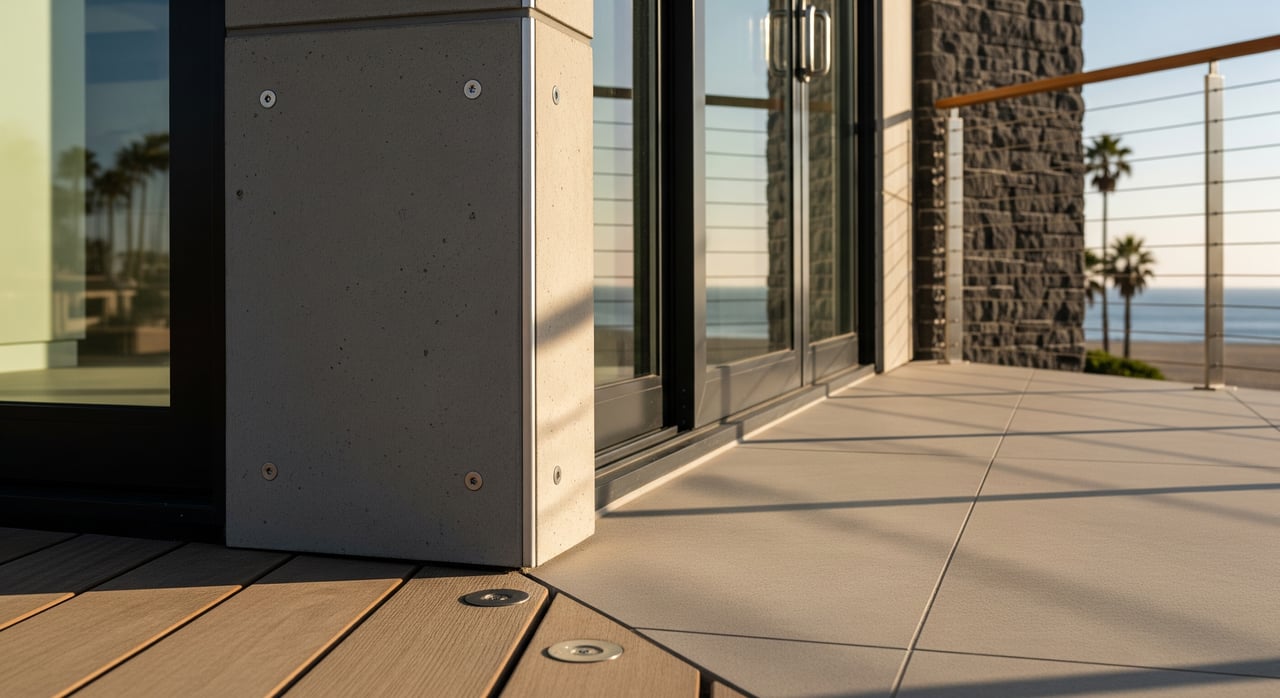
- Capped composite: A PVC‑capped composite stands up to moisture and stains with low maintenance. Hidden fasteners and 316 stainless hardware are best. Expect color fade to be minimal with quality products.
- Cellular PVC: Fully synthetic and highly moisture‑resistant. Follow the manufacturer’s guidance on spacing and thermal movement.
- Tropical hardwoods (like ipe): Dense, strong, and naturally rot‑resistant. Higher upfront cost and requires stainless fasteners. Oil or seal if you want to keep the original color.
- Pressure‑treated lumber: Cost‑effective but needs regular care. Use stainless or silicon bronze fasteners because preservative treatments can corrode standard metals.
Railings that resist corrosion
- Powder‑coated aluminum: Lightweight and low maintenance. Specify a durable topcoat suitable for coastal environments.
- 316 stainless cable and fittings: The molybdenum in 316 stainless improves chloride resistance, making it the right choice for coastal cable railings and exposed hardware.
- Glass systems: Great for views if you use coastal‑rated anchors, UV‑stable gaskets, and well‑drained base details.
Windows, doors, and hardware
Frames that perform
- Fiberglass frames: Stable in heat and salt, low maintenance, and energy efficient.
- Aluminum‑clad with coastal finish: Choose PVDF or marine‑grade anodized finishes for durability.
- Vinyl (uPVC): Corrosion‑free and budget‑friendly. Make sure the vinyl is UV‑stabilized for coastal sun.
Hardware and thresholds
Specify 316 stainless hinges, locks, and exterior screws. Use marine‑grade multipoint locks on doors exposed to wind. Install sill pans and proper flashing to ensure water drains out, not in.
Fasteners and flashing fundamentals
Fasteners and flashings often fail first in a coastal home. Choose 316 stainless across exposed fasteners and connectors whenever possible. Where budgets require alternatives, use high‑quality duplex‑coated systems and keep them out of direct salt spray.
Avoid galvanic corrosion by keeping dissimilar metals from touching. Isolate copper from aluminum or steel with gaskets or barrier tapes. Select flashings in stainless, PVDF‑coated aluminum, or compatible non‑ferrous metals, and size gutters and downspouts for quick drainage.
Paints, coatings, and sealants
Exterior paints
Use top‑tier 100% acrylic exterior paints with strong UV and chalk resistance. In coastal exposure, they typically outlast lower‑tier blends and maintain color better.
Metal finishes
Fluoropolymer coatings like PVDF on metal roofs and trims resist UV and chemicals in marine environments and hold color longer. Confirm the finish and warranty are rated for coastal exposure.
Sealants and caulks
Use UV‑stable silicones, polyurethanes, or MS polymers rated for coastal conditions. Verify adhesion to your specific substrates and know which products are paintable.
Install for coastal durability
Good materials perform best with smart detailing. Ask your contractor to include:
- A ventilated rainscreen behind siding to let walls dry.
- Through‑wall flashings, sill pans, and continuous drainage paths at penetrations.
- Sealed cut edges and protected end grain on fiber‑cement and wood.
- Isolation between dissimilar metals and careful selection of fasteners.
- Manufacturer coastal installation notes and warranties that explicitly cover salt exposure.
Two prioritized materials palettes
Remodel to sell: value and curb appeal
If you want maximum market impact with controlled costs, focus on visible durability and low maintenance:
- Fiber‑cement siding with a fresh, high‑quality paint job.
- Capped composite decking on primary outdoor spaces.
- Fiberglass or aluminum‑clad windows with a coastal‑grade finish.
- Powder‑coated aluminum railings or a touch of 316 stainless cable in key view areas.
- 100% acrylic exterior paint for trim and doors with color updates.
- 316 stainless fasteners in exposed or structural locations.
Why it works: Buyers love clean lines and low upkeep. These choices signal quality without going overboard on lifetime cost.
Long‑term hold: lowest lifecycle cost
If you plan to keep the home for decades, invest where corrosion and moisture typically strike first:
- PVDF‑coated metal roof or high‑quality tile with stainless flashings.
- Fiber‑cement siding over a ventilated rainscreen with robust through‑wall flashings.
- 316 stainless hardware, fasteners, and connectors throughout the exterior.
- Premium capped composite decking or tropical hardwood with stainless fasteners.
- Stainless or high‑performance coated aluminum for gutters and downspouts.
- Fiberglass or coastal‑grade aluminum‑clad windows and doors with stainless reinforcement and hardware.
Why it works: You cut replacements and failure risk, and you protect structure and finishes in the harshest zones of the envelope.
Maintenance timeline you can trust
Staying ahead of salt and sun will extend your investment:
- Annual: Inspect railings, fasteners, deck boards, roof flashings, vents, and caulks for corrosion, looseness, cracking, or gaps. Clean decks and wash down coastal salt buildup.
- Every 5 to 10 years: Replace or refresh flexible sealants as needed based on product ratings and exposure.
- Repainting: Expect 8 to 15 years for top‑tier acrylics in severe coastal exposure, depending on color and sun orientation. Metal PVDF finishes often last 20 years or more before significant fading.
- Typical lifespans in coastal conditions: Fiber‑cement siding 30+ years, PVDF‑coated metal roofs 30 to 50 years, capped composite decking 20 to 30 years, ipe 25 to 50 years with care, 316 stainless hardware for decades.
Cost and resale considerations
Coastal‑grade upgrades like 316 stainless, PVDF finishes, and premium composites often add 10 to 40 percent to material costs compared with standard options. In return, you reduce maintenance cycles, avoid early replacements, and improve buyer confidence when you decide to sell. Documenting your materials, fastener grades, and coastal‑specific details can boost perceived quality at listing time.
Permits, codes, and local checks
Confirm whether your project sits in the coastal zone and whether it requires a Coastal Development Permit. California Title 24 energy standards can affect reroofing and reflective roof requirements. For flood and sea‑level considerations, check the FEMA Flood Map Service Center and the NOAA Sea Level Rise Viewer. For permitting in the coastal zone, start with the California Coastal Commission’s permit guidance and coordinate with the City of Redondo Beach Planning & Building Division.
How to choose the right contractor
- Ask for coastal references and photos of completed projects near salt spray.
- Require 316 stainless for exposed fasteners and connectors, with substitutions approved in writing.
- Review flashing and rainscreen details in the bid, not just finish materials.
- Confirm that manufacturer warranties explicitly cover coastal exposure.
- Set inspection checkpoints for fasteners, flashings, and coatings before final payment.
Ready to protect your home and your resale value with the right coastal‑proof materials? Reach out for local guidance tailored to your block, exposure, and plans. Unknown Company is here to help you prioritize smart upgrades and coordinate the right crew.
FAQs
Do I need 316 stainless near the ocean in Redondo Beach?
- For exposed fasteners, railings, and hardware in direct salt exposure, 316 stainless is the preferred choice. In less exposed areas, duplex‑coated fasteners can work but will have a shorter lifespan.
How close to the beach counts as “coastal exposure”?
- Salt spray can travel well inland depending on wind and topography. Many manufacturers define coastal by distance, but site conditions matter more. Use local contractor experience and manufacturer guidance for your exact location.
Are standard exterior paints and caulks okay here?
- Choose high‑quality 100% acrylic exterior paints and UV‑stable sealants rated for marine or high‑UV environments. Lower‑tier products tend to chalk, fade, and fail early in our climate.
How much more do marine‑grade upgrades cost?
- Expect a 10 to 40 percent premium for items like 316 stainless, PVDF‑finished metals, and top‑tier composites. These costs are often offset by fewer repaints, replacements, and callbacks.
Are composite decks environmentally responsible?
- Many capped composites use recycled content and reduce pressure on timber resources, though recyclability varies by brand and region. If this matters to you, ask for product environmental declarations and local recycling options.